
Crawlspace encapsulation helps block moisture from the ground, but it may not be enough to control every moisture problem. Homes with high humidity, existing mold, or water intrusion may also need mold remediation, drainage improvements, or a crawlspace dehumidifier.
In Chapel Hill, NC, humidity can contribute to mold growth, musty odors, and damage to wood framing and insulation. The key to protecting your home is addressing the source of the moisture—not just covering it up.
What Does Crawlspace Encapsulation Do?
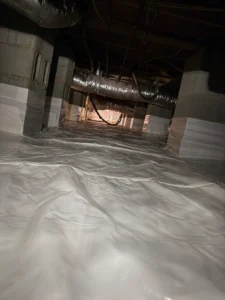 Crawlspace encapsulation involves installing a durable vapor barrier over the ground and sealing appropriate areas to limit moisture intrusion.
A properly installed system can help:
- Reduce moisture entering from the soil.
- Limit humid outside air entering the crawlspace.
- Protect wood framing and insulation.
- Create a more controlled environment beneath your home.
However, encapsulation alone will not resolve existing mold or standing water.
Why Is Mold Remediation Important?
If mold is already growing on floor joists, subflooring, or insulation, installing a vapor barrier will not eliminate the existing problem.
Professional mold remediation addresses affected surfaces and materials while identifying the moisture conditions that allowed mold to develop. Correcting the underlying problem is essential to reducing the risk of mold returning.
Do You Need a Dehumidifier After Encapsulation?
Even an encapsulated crawlspace can experience elevated humidity. A properly sized crawlspace dehumidifier helps remove excess moisture from the air and maintain more consistent humidity levels.
Keeping relative humidity below 60% helps reduce conditions that encourage mold growth. A dehumidifier works best alongside effective encapsulation and proper drainage—not as a replacement for fixing leaks or addressing existing mold.
How Do These Crawlspace Services Work Together?
For many homes with moisture problems, the process involves several steps:
- Inspect the crawlspace. Identify water intrusion, drainage issues, mold, and elevated humidity.
- Address existing problems. Correct water sources and remediate mold where necessary.
- Install encapsulation. Seal the ground and appropriate foundation areas with a durable vapor barrier.
- Control humidity. Install a suitable dehumidifier when needed to maintain a healthier moisture balance.
The right combination depends on your home’s condition. A professional inspection can help determine which services are necessary.
Signs Your Crawlspace May Have a Moisture Problem
Watch for these common warning signs:
- Persistent musty odors inside your home.
- Visible mold or discoloration on wood.
- Wet or sagging insulation.
- Standing water or damp soil.
- Condensation on pipes or ductwork.
- Persistently high humidity.
Addressing these issues early can help prevent more extensive moisture-related damage.
Crawlspace Moisture Solutions in Chapel Hill, NC
EcoCrawls provides crawlspace encapsulation, mold remediation, vapor barrier installation, dehumidifiers, French drains, and sump pump solutions in Chapel Hill and surrounding Triangle communities.
Whether you are dealing with mold, excess humidity, or moisture beneath your floors, our team can help identify the problem and recommend an appropriate solution.
Contact EcoCrawls at (919) 265-8686 or contact us to request an estimate.